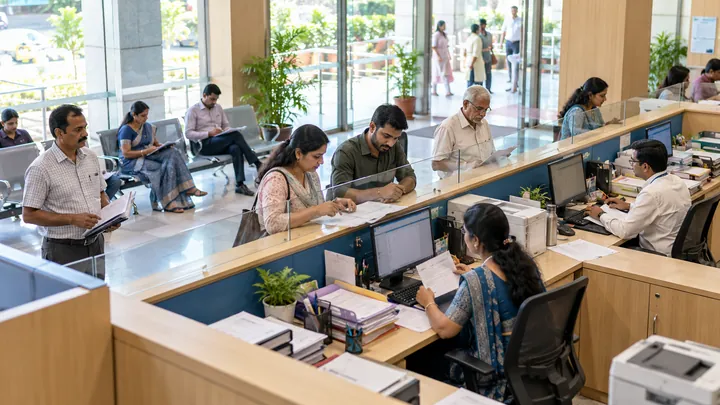
Determine which laws cover each workplace
Shops and establishments laws are state and territory laws. The central 2016 model law was a policy template, not a nationwide registration law. A retail shop, corporate office, technology centre, restaurant, warehouse or shared office may be covered, depending on the local definition, actual activity and exemptions. Banking, certain professional offices and premises governed by factory provisions can have specific exclusions. A postal address or certificate of incorporation alone does not settle the question.
The Occupational Safety, Health and Working Conditions Code, 2020 (OSH Code) came into force on 21 November 2025. Evaluate its application separately, including the definition of establishment and worker, the appropriate government, applicable rules and any sector-specific provisions. A state registration does not discharge duties under the Code. Likewise, central coverage does not by itself cancel local registration, signage or record duties. For covered workers, sections 25, 27 and 32 address working time, overtime and leave; section 43 addresses employment of women, including consent and prescribed conditions for work before 6 a.m. or after 7 p.m. The Ministry explains the standard as eight hours a day and 48 hours a week. Check the applicable interval, spread-over and overtime rules, including S.O. 2517(E) of 13 May 2026 where applicable.
Registration, renewal and records by jurisdiction
Record the date business started, count workers under the local definition and distinguish an intimation from a registration. Include agency or part-time staff where the law requires them. Check any exemption, then keep the current form, receipt, expiry and return schedule in the location file. Where a service or portal guide differs from the law, identify the controlling notification and obtain written clarification before filing.
| Jurisdiction | Registration and renewal checkpoints | Other obligations to verify |
|---|---|---|
| Maharashtra | Sections 6–7 and the 2018 Rules prescribe separate full registration and intimation routes, with a 60-day commencement rule. The consolidated text uses a 10-worker split and permits registration for the period requested up to 10 years. See the date caution below. | Use the applicable prescribed return (Form R under rule 28 of the 2018 Rules); track changes, closure and the separate labour welfare fund. Section 36A applies to name boards. |
| Karnataka | Karnataka Act 38 of 2026 makes section 4 registration digital and valid until closure or cessation. Section 3(1)(k) exempts establishments employing at least 10 workers already registered under the OSH Code; the proviso addresses godowns or storage within 100 metres of the principal establishment. | Review hours and leave for sites still covered. The September 2026 Act also removed clauses (h)–(o) from the state night-work conditions; check the remaining state provisions and applicable OSH requirements. |
| Delhi | The Labour Department Inspectorate says registration under section 5 is kept in abeyance. Online registration services do not by themselves make registration compulsory. | Check coverage, sections 8 and 22 for working hours and leave, and any class-specific orders under the 1954 Act for opening and night work. |
| Haryana | Use the 1958 Act as applicable in Haryana, including Haryana Act 13 of 2026, and verify the current portal route and headcount rules. Online self-certification can qualify a shop for the 30 March 2026 opening-hours and close-day exemption. | Check the separate section 28 self-certification process and conditions for women’s night work. Keep the relevant acknowledgement and verify conditions before rostering. |
| Uttar Pradesh | Use the U.P. Dookan Aur Vanijya Adhishthan Adhiniyam, 1962 and the state Labour Department’s registration service. Check the issued certificate and current rules for renewal, changes and closure. | Verify the classification of each Noida or Lucknow site and any applicable local opening-hours or night-work permission. |
| Telangana | The September 2025 exemption for establishments with up to 10 employees expressly retained registration, renewal and several employment provisions. The official index also lists a June 2026 self-registration order; confirm the current filing route. | Read the Telangana orders applicable to the location, including separate 24-hour operation and women’s night-work orders. Do not treat the small-establishment exemption as a waiver of wage or leave duties. |
| Tamil Nadu | Section 3, as amended, requires an establishment employing at least 10 workers to apply and obtain registration within six months of starting business. Rules 2A–2B use Form Y for the application and Form Z for the certificate. The transitional intimation under section 3(8) is for covered establishments already in existence when the amendment commenced. | Check reporting duties and section 22-A on seating facilities, along with the applicable hours and holiday provisions. |
| Gujarat | Sections 1, 6 and 7 distinguish full registration from intimation, ordinarily within 60 days of commencement. Gujarat Act 1 of 2026 raised the threshold from 10 to 20 with effect from 16 December 2025. A section 6 certificate remains in force until ownership or the nature of business changes. | The 2026 amendment also changed daily working-time, overtime and night-work rules. Check the state rules and applicable central requirements before setting shifts. |
Maharashtra’s 1 October 2025 ordinance used a 20-worker threshold and changed working-time limits. The Bombay High Court’s legislative index lists the replacement measure as L.A. Bill 89 of 2025 without an enacted Act number, and the consolidated Act text retains the 10-worker wording. For an establishment in the 10-to-19 band, verify the current gazetted basis and filing route with the jurisdictional Facilitator; do not apply the draft rules or bill as enacted law. The Pune example below predates the ordinance.
Working time, leave and 24-hour operations
Use the following checks to build a roster and leave policy by site. A permission to stay open overnight governs the business’s hours. The hours an individual can work, the weekly rest they receive, and any safeguards for night work require separate checks. An IT or IT-enabled services label does not itself establish a blanket exemption.
| Control | What to verify | Evidence to retain |
|---|---|---|
| Ordinary hours and spread-over | Track paid work, intervals and the complete shift window separately. Compare the daily and weekly triggers, applicable rest periods and overtime caps under state and central provisions. | Rosters, actual clock records, weekly rests and signed overtime consent where applicable. |
| Overtime wages | Use the statutory wage base and a supported hourly divisor. Calculate daily and weekly triggers without counting the same hour twice. An overtime payment does not cure an excessive roster. | Pay elements, overtime calculation, approval and bank/payroll evidence. |
| Leave and encashment | Distinguish earned leave from casual and sick leave. Check accrual, prior service, accumulation, refused leave, and payout on separation under the applicable law. | Attendance, leave ledger, refusals and settlement calculation. |
| Night work | Check the legal time band, worker consent, the scope of the order, and any reporting, safety, transport and staffing conditions. GPS, escort, staffing and CCTV terms depend on the applicable instrument. | Consent, applicable order, acknowledgement, security and transport arrangements, incident response and audit evidence. |
| Prevention of sexual harassment | Constitute the Internal Committee where required under the POSH Act. Establishments with fewer than 10 workers use the Local Committee route where no Internal Committee is constituted for that reason. | Constitution order, complaints channel, training and annual reporting records. |
Six worked examples
1. Gurugram SaaS office: regular registration and night work are separate
CloudPulse runs a 120-seat site and proposes a 9 p.m. to 6 a.m. roster for 25 women engineers. That is a nine-hour shift window; an hour free from duty would leave eight hours of work. Check placement of the break, weekly hours and the applicable rules. Under Haryana’s 30 March 2026 notification the 8 p.m. to 6 a.m. women’s night-work band requires a separate section 28 application, processed by online self-certification under the notification dated 13 October 2025. Confirm all applicable conditions, file the application and retain its approval before using the roster. A registration certificate and GPS transport alone do not show compliance. Preserve consent, safety arrangements, staff lists and POSH documentation as applicable. Review the recorded validity rather than assuming a one-year grant.
2. Mumbai consulting firm: earned leave and termination liabilities
Zenon has 80 staff and grants 12 days of privilege leave with no carry-forward. Under Maharashtra section 18, a qualifying worker with 240 days of actual work earns 12 days at one day per 20 days; with 300 days of actual work the result is 15 days. Assuming 300 days in each of three years, a uniform 12-day allocation understates accrual by nine days before leave taken or restored balances. Track the separate eight days of casual leave and the earned-leave accumulation limit of 45 days. Section 18 has distinct rules for refused leave and payment in specified separation cases; a blanket year-end lapse policy does not reflect them.
Rebuild the departing manager’s ledger with actual days worked and leave taken or refused, then apply the applicable wage basis and separation rule. An assumed ₹38 lakh provision across 80 employees would average ₹47,500 each, but neither the headcount nor the statutory cap establishes the liability. Measurement under the applicable accounting standard needs employee-level leave and pay data and the relevant settlement assumptions.
3. Bengaluru warehouse: calculate overtime on the statutory base
Assume a non-factory warehouse covered by the Karnataka Act in October 2025. Fifty associates work six eight-hour days and then 10 extra hours each, a total of 58 hours. Section 8 applies twice normal wages beyond nine hours in a day or 48 in a week. Normal wages include basic wages and qualifying allowances and exclude bonus. Assume all of ₹13,000 basic, ₹8,000 HRA and ₹5,000 special allowance qualify and use an illustrative 26 days × 8 hours = 208-hour monthly divisor.
| Step | Per associate | 50 associates |
|---|---|---|
| Ordinary hourly wage | ₹26,000 ÷ 208 = ₹125 | — |
| Overtime for 10 hours | 10 × ₹250 = ₹2,500 | ₹1,25,000 |
| Payroll actually paid at 1× basic | 10 × ₹13,000 ÷ 208 = ₹625 | ₹31,250 |
| Shortfall | ₹1,875 | ₹93,750 |
Reconcile the actual divisor, pay elements and distribution of hours before correcting payroll. Section 7 ordinarily limits total hours including overtime to ten per day (subject to its stated exception) and 50 overtime hours in three continuous months. Check any opening order or stricter rule for the site. Paying the difference does not authorize the hours worked.
4. Pune advisory firm: headcount increases from six to 14
FinEdge started in January 2024 with six workers and filed Form F, receiving a Form G intimation receipt. It added eight workers in September 2025, before the October ordinance. Reaching ten triggered section 7’s requirement to obtain section 6 registration. Apply promptly in Form A for a Form B certificate and preserve the existing intimation. Section 6’s 60 days is stated by reference to commencement; do not assume a separate 30-day grace period on crossing the threshold. After registration, track the prescribed return, and assess labour welfare fund contributions separately.
5. Bengaluru office: an English-only board
GlobalFin’s 200-seat site displays its name only in English. Section 17(6) of the Kannada Language Comprehensive Development Act, as amended by Karnataka Act 7 of 2024, requires covered undertakings to display 60% in Kannada with Kannada in the upper half of the name board. Review the notice and correct the board without assuming a particular fine or cancellation outcome. In Maharashtra, section 36A separately requires Marathi in Devanagari, first on the board, in lettering no smaller than any other language. These are separate requirements.
6. Hyderabad subsidiary: six desks in a co-working site
A Mumbai business leases six dedicated desks for its Hyderabad team. Count the subsidiary’s actual employees under the Telangana Act; desk capacity does not establish legal headcount. If the team has six employees, it falls within the numerical range of the September 2025 exemption, which retained registration and renewal. Confirm the current self-registration route under the later Telangana order. The operator’s certificate is not evidence of the tenant’s own compliance. Keep the co-working agreement, evidence of authority to use the address, a premises document where required and the tenant’s own filing acknowledgement. Verify the actual portal checklist before submission.
Build a location compliance file
- Before opening: record the legal employer, location, activity, actual commencement and statutory headcount. Set the legal filing date from the local rule and preserve the application and issued receipt or certificate.
- Before rostering: establish a shift and leave matrix by workplace, obtain any required permissions and verify both pay and staffing limits. Keep attendance and wage exports in the prescribed form or an officially permitted equivalent.
- During the year: calendar returns, registration expiries, exemption conditions and other filings separately. Attach the controlling rule and keep filing receipts.
- On changes or closure: document the date and verify the statutory notification or surrender deadline. Review tax and welfare registrations separately.
Frequently asked questions
1. Does a GST registration or incorporation certificate replace a Shops and Establishments filing?
No. Assess the local registration or intimation obligation under the labour statute. The filing deadline and penalties depend on the jurisdiction and breach.
2. Must a business with two promoter-directors and no staff register?
Check coverage of the premises and the local worker definition. An intimation route may apply to a covered small establishment even where full registration is not required. Delhi’s Inspectorate lists its section 5 registration requirement as held in abeyance.
3. Are senior managers exempt from hours or overtime rules?
Some statutes exclude actual managerial staff or other named classes. Verify duties and the specific statutory exemption; a title or grade does not settle it.
4. What changed with the OSH Code?
It commenced on 21 November 2025 and adds a central framework for covered establishments and workers. Check the relevant provisions and rules and compare them with the state law at the site.
5. Can a seven-day notice policy automatically defeat urgent casual or sick leave?
Examine the relevant leave provision and the circumstances. Apply any legally permitted notice or evidence requirement and check whether the policy would cut down the statutory entitlement. Do not assume a common advance-notice period for every leave type.
6. Is a local trade licence the same as a Shops and Establishments certificate?
No. Municipal permissions are based on local activities and premises rules, such as health, fire or public-safety requirements. Check whether each permit applies before operating.
Sources
- Maharashtra Shops and Establishments Act, sections 1, 6–7, 18 and 36A
- Maharashtra Gazette, 1 October 2025 ordinance
- Bombay High Court legislative index, L.A. Bill 89 of 2025
- Maharashtra Gazette, draft shops rules of 13 November 2025
- Karnataka Shops and Commercial Establishments Act, sections 4 and 7–16
- Karnataka Shops and Commercial Establishments (Amendment) Rules, 2024
- Karnataka Government Gazette, Karnataka Act 38 of 2026
- Karnataka Government Gazette, Karnataka Act 7 of 2024, Kannada signage
- Delhi Labour Inspectorate: Shops and Establishments Act implementation
- Haryana Government Gazette, Haryana Act 13 of 2026
- Haryana Government Gazette, 30 March 2026, section 28 order
- Uttar Pradesh Dookan Aur Vanijya Adhishthan Adhiniyam, 1962
- Telangana Shops and Establishments Act, 1988
- Telangana official index of shops and establishments orders
- Telangana G.O. Rt. 383 of 23 September 2025, text of the small-establishment exemption
- Tamil Nadu Gazette, 2023 amendment to the registration provisions
- Tamil Nadu Gazette, 2 July 2024, amended forms and rules
- Gujarat Shops and Establishments Act, 2019
- Gujarat Government Gazette, Gujarat Act 1 of 2026, appended to the 2019 Act
- Occupational Safety, Health and Working Conditions Code, sections 25, 27, 32 and 43
- Central Gazette S.O. 5321(E): commencement of OSH Code
- Central Gazette S.O. 2517(E): intervals and spread-over
- POSH Act, sections 4 and 6